
Why I love watching rock-climbing documentaries on the couch with my husband.
November 2023
Unless you count a trip to an indoor rock-climbing gym, where I was in a complete safety harness and probably less than 25 feet from the padded floor the whole time, I have never been rock climbing. I’m not exactly Everest material. But I am fascinated by rock climbing documentaries. I love the gorgeous views that I will likely never see in real life. I love how the camera swoops off the cliff face, so I feel like I might suddenly fall off my couch. I imagine the thrill of pulling myself into the blue sky. Then I go to sleep to be fresh for my office job in the morning, where my only real dangers are Carpal Tunnel and diabetes.
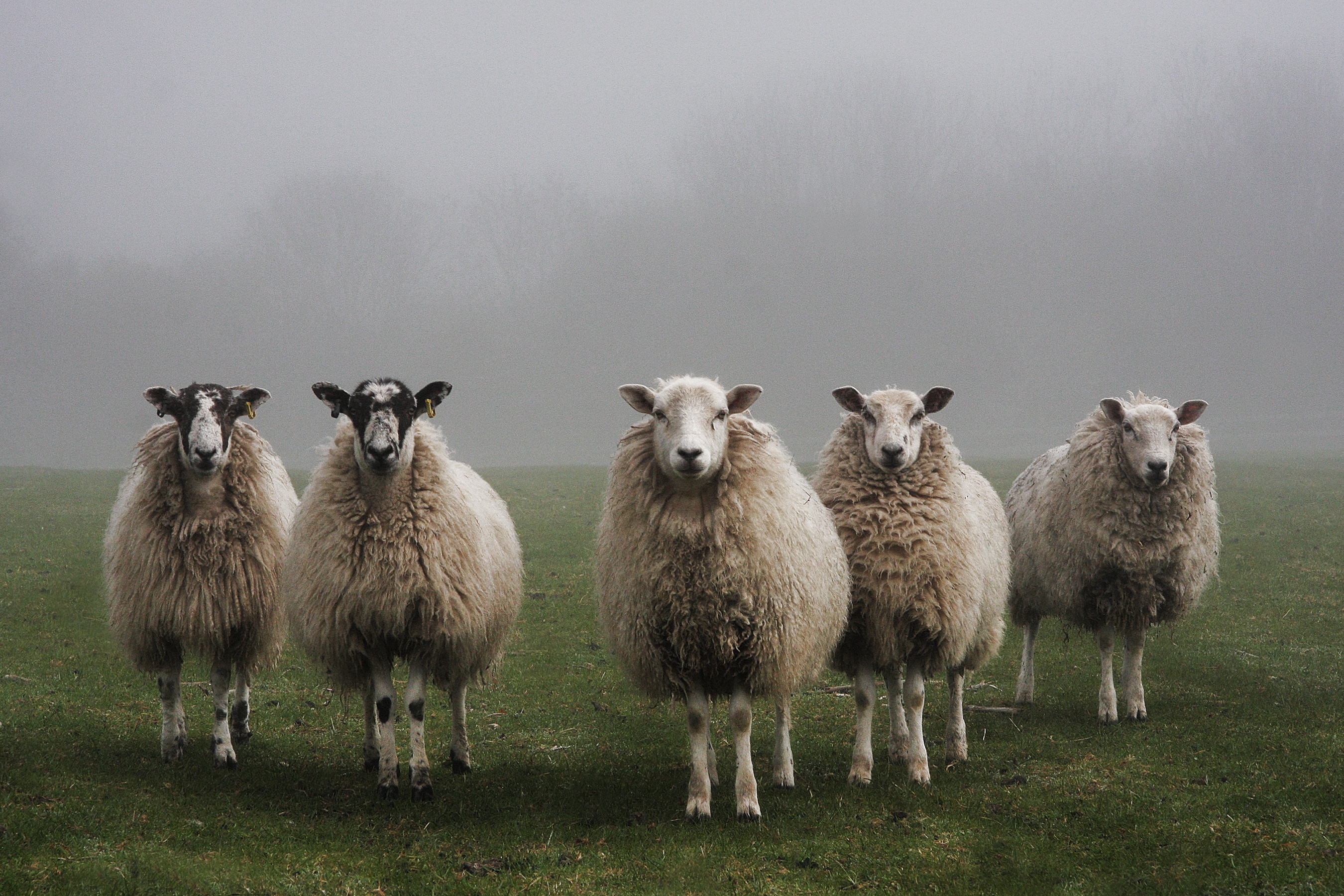
The other day, I was sitting on the couch watching Race to the Summit, a new documentary on Netflix about competitive rock climbing. After the requisite gorgeous views and death-defying feats, we sit down with a reporter who says that at the funeral of the groundbreaking Swiss rock climber and alpinist Ueli Steck, his wife gave the reporter a slip of paper with a Tibetan proverb. This proverb was reportedly important to Ueli Steck: “Better to live one day as a tiger than a thousand years as a sheep.” Watching this in my living room, I have to ask myself: is it?
The Tigers
In the 2018 documentary The Dawn Wall, rock climber Kelly Cordes says, “I think we all admire people who are dedicated, but at some point, you start to wonder, where are the lines between dedication and obsession?” What drives people to go beyond hobby climbing to achieve spectacularly dangerous feats in extreme sports like rock climbing? What drives the tigers among us?
Maybe it’s simply a matter of finding an arena where you can, you know, rock. In the first spoken line in Netflix’s Race to the Summit, competitive climber Ueli Steck says, “Climbing against the clock is an unforgiving task, but I wanted to show I could do something and prove I could do it better than anyone else.” American rock climber Tommy Caldwell shared a similar sentiment in The Dawn Wall: “Climbing was the first thing in my life where I could stand out a little bit.” Competition climber Miho Nonaka is also highly driven. In the 2022 documentary The Wall: Climb for Gold, Nonaka says, “Ever since I started climbing, my goal has been to be the strongest climber in the world.” Finding an arena to be competitive is a strong motivator for many climbers.
Climbing can also help people to overcome trauma. Tommy Caldwell says he turned to an extreme free climbing challenge in the wake of his devastating divorce. Free climbing means climbers do not use the rope to ascend the mountain but only as a safety rope in the event of a fall. Free climbers use no artificial help to ascend. In The Dawn Wall, Caldwell said, “I was hurting so bad that I had to figure out a distraction in life. I couldn’t just sit there and feel the pain.” Caldwell spent years searching for a route to free climb the Dawn Wall of El Capitan. El Capitan is a prominent and iconic granite rock formation in Yosemite National Park in California. It is one of the world’s most famous and challenging destinations for rock climbers. He was “finding something to obsess about, so I wouldn’t obsess about my divorce.” Caldwell and his climbing partner, Kevin Jorgeson, completed the first free climb of the Dawn Wall of El Capitan in 2015. It’s apparent, watching the documentary, that climbing the Dawn Wall helped Caldwell to heal from his emotional pain.
The Allure
Willem Dafoe, who I remember as the actor who once tormented Tobey Maguire as the Green Goblin in 2002’s Spider-Man, sums up the allure of the mountains beautifully as the narrator of the gorgeous 2017 documentary The Mountain: “To those who are enthralled by mountains, they’re wonders beyond all dispute.” More and more Americans are enthralled by mountains every year. A report by the Outdoor Industry Association found that in 2022, participation in outdoor recreation hit a record of 168.1 million, while rock climbing and bouldering saw a 6.6% growth rate from 2021 to 2022. Gen Alpha is getting in on the action as well. Rock climbing is one of the outdoor recreation categories with the highest growth rate among kids in 2022.
And this fascination with the mountains is not only a modern phenomenon. For many ancient peoples, the mountains were the “seats of the Gods.” Horeb of Sinai was sacred to the Jewish people, and Mount Olympus was said by the Greeks to be the home of the Gods. “The Cedar Mountain of the Assyrians, the Caucasus of the Persians, the peaks of the Himalayas on India’s northern border . . . they all are understood as steps or ladders to what is immeasurable, unknown, and high above.” People have always been drawn to the mountains.
Of course, the allure is not universal. Willem Dafoe’s Green Goblin is notoriously not a fan of wall climbers. “Wake up, little spider. . . [T]he one thing they love more than a hero is to see a hero fail, fall, die trying.”
The Risks
The risks of rock climbing are obvious. The 2018 documentary Free Solo opens with the lonely sound of wind in the high mountains. We see a steep granite cliff face speckled in black, white, and cream. The pine treetops sway hundreds of feet below. We hear the quiet sound of human breath. The camera pans, and then we see it: a red shirt. A man hangs from the sheer cliff face like a bug on a wall, standing on nothing. He’s climbing without a rope, hanging there like he thinks he is Spider-Man.
The critical question is asked just over 1 minute 30 seconds into the film. A journalist asks the rock climber, Alex Honnold, now seated in a television studio, “Here is what I don’t understand: one little mistake, one little slip, and you fall and die.”
“Yeah. . . You seem to understand it well,” says Alex.
To the uninitiated, extreme sports like rock climbing are the domain of thrill seekers. However, people participating in extreme sports often spend more time on risk reduction than in their risky sports. According to the 2016 paper, “Experiencing Flow, Enjoyment and Risk in Skydiving and Climbing,” in extreme sports, “risk management is a central aspect of the experience. Skydivers carry out safety checks on their kit before jumping, climbers think carefully about the weather conditions, whitewater rafters know all about the currents they have to negotiate, and divers ensure they have checked their oxygen. Rather than throwing caution to the wind, this suggests a group of people who take responsibility for their actions.” Often, climbers spend more time on preparation and risk management than they do in climbing.
Professional rock climber Alex Honnold spent years climbing and re-climbing the Freerider Route of El Capitan in Yosemite, often referred to simply as El Cap, with a rope and safety gear to plan the route he would climb free solo—without a rope. In 2017, Honnold became the first climber to free solo the Freerider Route. In the 2017 documentary Free Solo, Honnold said, “It’s not like I’m just pushing and pushing and pushing until something terrible happens.” He prepared himself by training and planning. He did not climb El Cap free solo as a thrill-seeking dance with death.
Alpinist and rock climber Marc-André Leclerc made the first-ever free solo summit of the Emperor Face of Mount Robson, the highest mountain in the Canadian Rockies. In the 2021 documentary The Alpinist, Leclerc says, “I don’t really like to feel like I’m pushing myself. That’s not the reason for soloing rock for me. I don’t like to feel like I’m doing something intense or scary.” Later in the film, he says, “The goal is to climb as safely as possible.” He is not in it for the thrills.
So, if risk is not the point, what is? You might say it’s the money—climbers who make records often get product endorsement deals. But typically, climbers who make money climbing are making money so they can keep climbing. Alex Honnold, one of the world’s top climbers, says in the 2018 documentary Free Solo that he earns about the same as a moderately successful dentist, though he is rumored to make a bit more than that these days.
The Rewards
Many rock climbers have noted that when they’re climbing, they feel fully present, and nothing else matters. In the 2021 documentary The Alpinist, Marc-André Leclerc says, “When I’m in the mountains on a big adventure, life is so incredibly simple. I’m totally focused.” Brette Harrington, an American professional rock climber and alpinist who completed the first free solo of Chiaro di Luna in Patagonia, says that soloing “puts you directly in the present. You can’t be thinking about anything else.” In the 2022 documentary The Wall: Climb for Gold, competition climber Janja Garnbret describes rock climbing to reset her mind. “All the doubts disappear; I forget about anything. And then it’s just me and the wall.” In an interview with NBC 5 in Dallas Fort Worth, professional climber Kai Lightner said, “I feel like there’s no point in my life where I feel more physically, mentally, full-body in tune with myself than when I’m moving on the wall.” Over and over again, we hear from professional climbers about the joy and pleasure of being in the moment, focused on the immediate task at hand.
This focus on the present, this intense mindfulness, is known to improve overall wellbeing. According to a 2021 paper by Katherine A. Wheatley, “There is an increasing body of literature supporting mindfulness training . . . as a means to improve wellbeing.” Wheatley stated, “Previous research has demonstrated that rock climbers have a higher endorsement of mindfulness and life satisfaction.” Wheatley conducted a study among climbing beginners and advanced beginners and found that “engagement with rock-climbing increases mindfulness in young adults.” Other institutions agree. Scotland’s National Health Service (NHS) Inform website states that “Climbing involves concentration and thought, as well as physical exercise,” and that climbing “may help to alleviate the symptoms of some mental health problems.” Of course, both sources refer to regular hobby climbers, not the human wall-spiders among us.
This feeling of calm focus is not experienced only by hobby climbers. Many professional rock climbers report a sense of calm focus even during the riskiest climbs. Alex Honnold, a climber specializing in free solo climbing, says, “When you’re climbing without a rope, it’s obviously much higher consequence, much much higher level of focus. It’s a whole different experience.” Of his free climb of Moonlight Buttress, Honnold said, “When I did it, it was kind of groundbreaking, kind of extreme. But for me, it always felt quite easy, pretty secure.” This is partly a result of his extensive preparation and training. Marc-André Leclerc, whose free solo (rope-free) climb of the Stanley Headwall was documented in 2021’s The Alpinist, said of the route: “None of the ice is 100% continuous. It forms in blobs and pillars and hanging daggers. You have to climb steep overhanging rock just to get to the ice, and so it makes for really good, engaging climbing.” Asked if the route was scary, Leclerc said, “No, not particularly.” In both instances, the purpose was not thrill-seeking but the pleasure of intense focus. And, of course, in both cases, the climbers were experts with years and years of training, practice, and mentorship. It’s important to note that this feeling of calm doesn’t necessarily coincide with the actual level of risk. These risks can be deadly.
Still, over and over again, you hear climbers describe the mental clarity of the climbing experience. Of course, you might say that rock climbers MUST achieve a state of mindfulness and focus on the present because if they don’t pay attention to what they’re doing, they fall.
The Rest of Us
If a tiger is someone who dangles off cliff faces, then I am a sheep. Of course, as a sheep, I might say to these tigers, “You want some mindfulness? Try meditating!”
There are many reasons why some of us choose alternate methods of achieving mindfulness. The most obvious is that if you are not well trained, practicing safe techniques, and at the top of your game, your risk of injury or death is significantly increased. Even if you ARE trained, in great shape, at the top of your game, and taking every possible precaution, you could still be killed, and many are. Climbers cannot control the mountain. Most professional climbers have lost acquaintances, friends, mentors, or heroes to climbing accidents. It is not the safest sport. The Swiss rock climber and alpinist Ueli Steck, who inspired this article, died in 2017 from a fall on the Hornbein route on the West Ridge of Everest. Marc-André Leclerc was killed in 2018 in an avalanche on the Mendenhall Towers in Alaska. They were inspirations and heroes, and they died living the lives they chose.
I completely disagree with the Green Goblin: I hate to see a hero fall. I hate it when we hear of another injury, another death in the climbing world. I love watching these heroes climb, live their dreams, and be in the moment. I try to take their lessons into my own life and do things that help me be in flow—be in the moment—in my own way: by doing things I love, by writing, by being on the river, by closing my eyes in the sun.
For those of us who can’t or don’t choose to achieve mindfulness by hanging off a hunk of rock thousands of feet in the air, you don’t need mortal danger to practice mindfulness. Check out this article on Forbes about how to meditate. Or you can try websites such as Calm or apps like Insight Timer that offer audio meditations. There are lots of options.
What’s it to Me?
So why write a whole article about this proverb? The original quote is said to be from Tipu Sultan, the Tiger of Mysore, during a battle in which he was severely outnumbered, and his advisors told him to escape through secret passages to live and fight another day. He refused, saying, “Better to live one day as a tiger than a thousand years as a sheep.” He was killed in battle. The quote isn’t even about rock climbing.
It’s the false choice that bothers me. I bristle at the either/or dichotomy: it’s not better to be a tiger OR a sheep. We should not choose a side and then stand in our camps and point disparagingly at each other. It doesn’t have to be, “I’m a this, and you’re a that, and therefore, I’m good and you’re bad.” To make an example of one of the United States’s current most polarizing dichotomies: Democrats make some good points, and Republicans make some good points. We’re all humans—even if we vote for different parties, work different vocations, or choose different hobbies. We don’t have to be either/or, us/them, good/bad, friends/enemies, tigers/sheep. I say it again because it seems like I have to: we’re all humans. We’re all driven to live the best lives we can.
The tigers of the world have things to teach us. In the 2022 documentary The Wall: Climb for Gold, competition climber Shauna Coxsey says, “When I see the best athletes. . . they’re not afraid to fail. You can’t be 100% your best if you have some sense of fear of failure.” It’s true. We can all take a lesson from that: we can’t let fear of failure keep us from living the lives we choose. Life lessons like these, plus the stunning scenery and the genuine adventure, are all reasons why I eagerly await the next rock-climbing documentary. I will watch it from the safety of my couch while my husband and I eat dinner.
You don’t have to be a tiger. You don’t have to be a sheep. Be you. And every now and then, try losing yourself in doing something you love, even if it is extreme ironing. (Seriously, it’s a thing. Look it up.)
So go get ‘em, tiger. You be you, and I’ll be me. That’s all we can be.
 Sarah Olson