
Author’s note: This article was written for Companion Baking. It can be viewed on Companion Baking’s website here.
May 19, 2025
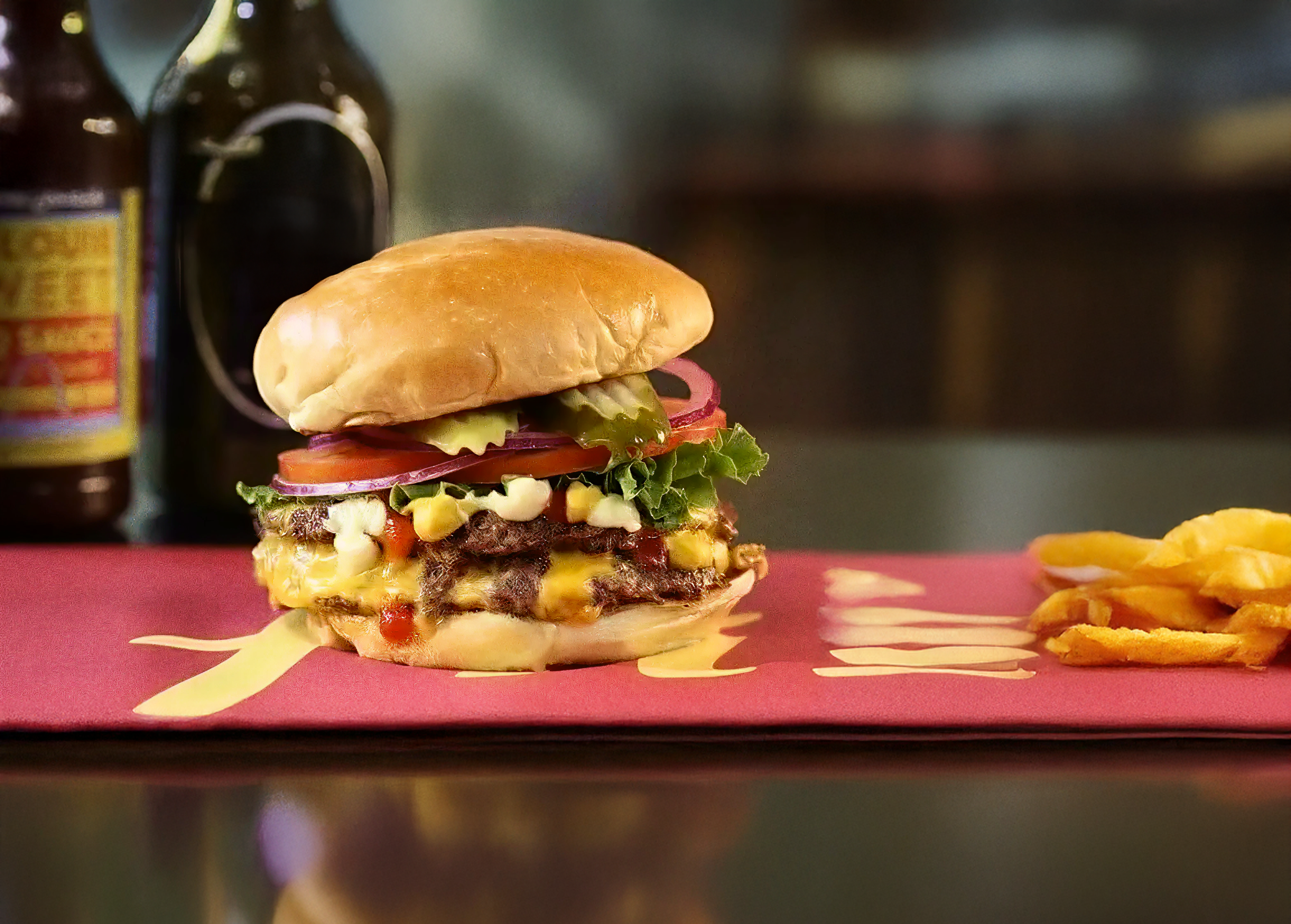
Stop reading this article right now.
If you’re local to the St. Louis area or just passing through, do yourself a favor and go and get a cheeseburger from Hi-Pointe Drive-In.
When you eat your burger fresh in the restaurant, you have high expectations: it’s gonna be fresh and hot. But what if you take your cheeseburger to go?
How would you feel if you got home and your cheeseburger bun had fallen apart during travel?
Ben Hillman, President of Hi-Pointe Drive-In, was determined not to let that happen. “We wanted a bun that had the same texture and chewiness that we loved straight off the griddle, but that could also hold up in a to-go container without losing integrity.”
A bun that will hold up during travel time
In a dine-in experience, the meat comes off the hot flat top glistening with cheese. Hi-Pointe Drive-In adds the bun, the toppings and the fries — sizzling hot — and it’s presented to your table in moments.
But many Hi-Pointe Drive-In customers never set foot in the restaurant. About 40% of their business is to-go or delivery. This changes the performance standards of the Hi-Pointe Drive-In cheeseburger bun.
“The chefs at Hi-Pointe Drive-In expressed that the bun that they were currently using was starting to break apart if the delivery time was too long; it was starting to become soggy.”
– Jonathan Potts, Companion
Hillman explains, “You put a cheeseburger in a to-go container, and there’s a lot of steam combined with a lot of grease. If you don’t have the right density in a bun, it just falls apart when you take a bite.”
Hi-Pointe Drive-In needed a bun that would taste great at a booth, in a car or on your couch. So, they reached out to Companion.
The bun balancing act: Soft yet sturdy
Spongy bread with a high percentage of fat is soft. But fat in your bread makes it susceptible to breaking down in a high-moisture environment.
On the other hand, bread with too low a percentage of fat from ingredients like butter and dairy is too dry. Jonathan Potts with Companion explains, “You don’t want a too-dry hamburger bun, just like you don’t want a dry piece of chicken or dry brisket on your sandwich.”
The key? Balance and baking conditions.
According to Potts, “We ended up backing out some of the fat percentages to create more stability in the internal structure of the bread.”
After meeting with their oven manufacturer, Companion tweaked the settings on their steam-injected convection oven to insert higher levels of steam into the bake. This gave the finished bun greater stability and structure.
But would it stand up to the test?
Iterating to perfection
Sometimes, it takes multiple iterations before you achieve that perfect product. According to Potts, “Our early tests told us one thing: we had more work to do.” But they were up to the challenge.
Companion brought their 30+ years of experience to the problem, and they ultimately created a cheeseburger bun that is great for dine-in, take-out or wherever it’s served.
The last step was to take the new cheeseburger bun for a test drive. “We made a cheeseburger in the Hi-Pointe Drive-In location to see how it performed, and it tasted great. Then we made another, and we sat it in the warmer for 60, 90 minutes, and it performed very well. We tested it repeatedly with different toppings and different hold times in the to-go container. Ultimately, we ended up creating a product that really achieved what they were looking for.”
“The whole process took about three months. Sometimes it’s faster. But from when we first started testing to where we ended up with the Hi-Pointe Drive-In bun, it took about three months, in the door to in the store.”
– Jonathan Potts, Companion
Sometimes, the right solution is an off-the-shelf solution. Sometimes, it’s a process.
A great burger, every time
When you sell as many cheeseburgers as Hi-Pointe Drive-In, being consistent every time at scale can be a challenge. According to Hillman, “With one of our old suppliers, the coloration would really differ day to day, even package to package. And that changes the texture, the flavor, everything.”
The Companion team understands. Bread is a living thing, with yeast and fermentation as part of the baking process. Companion works hard to achieve consistency in its bread products, including pans that deliver consistent sizing, coaching that delivers consistent products and a robust QA process.
According to Potts, “If you’re making a burger that is going to be five inches in diameter each time, you need a bun to be four inches in diameter each time.”
The proof is in the burgers. Hi-Pointe Drive-In’s partnership with Companion has been operating for over two years. According to Hillman, “Every time we get a pack of buns, it’s always the same.”
Success tastes great
When you sell as many cheeseburgers as Hi-Pointe Drive-In, being consistent every time at scale can be a challenge. According to Hillman, “With one of our old suppliers, the coloration would really differ day to day, even package to package. And that changes the texture, the flavor, everything.”
“Companion’s bread is delicious,” says Hillman. “It’s part of why we have the best cheeseburger in St. Louis. It’s the second most important component of the burger behind the beef. Some would maybe say it’s the most important, but yeah, it’s critical to what we do.”
Let’s talk
If you need a bread manufacturer that is ready to provide the high-quality bread that you need to scale your business, you need Companion.
Contact our Bread Development Team today or learn more about our process and bring your vision to life.
“We sell over half a million cheeseburgers a year. It’s important that quality is really consistent and that is one of the main reasons why we made the change to Companion.”
– Ben Hillman, Hi-Pointe Drive-I
 Sarah Olson